
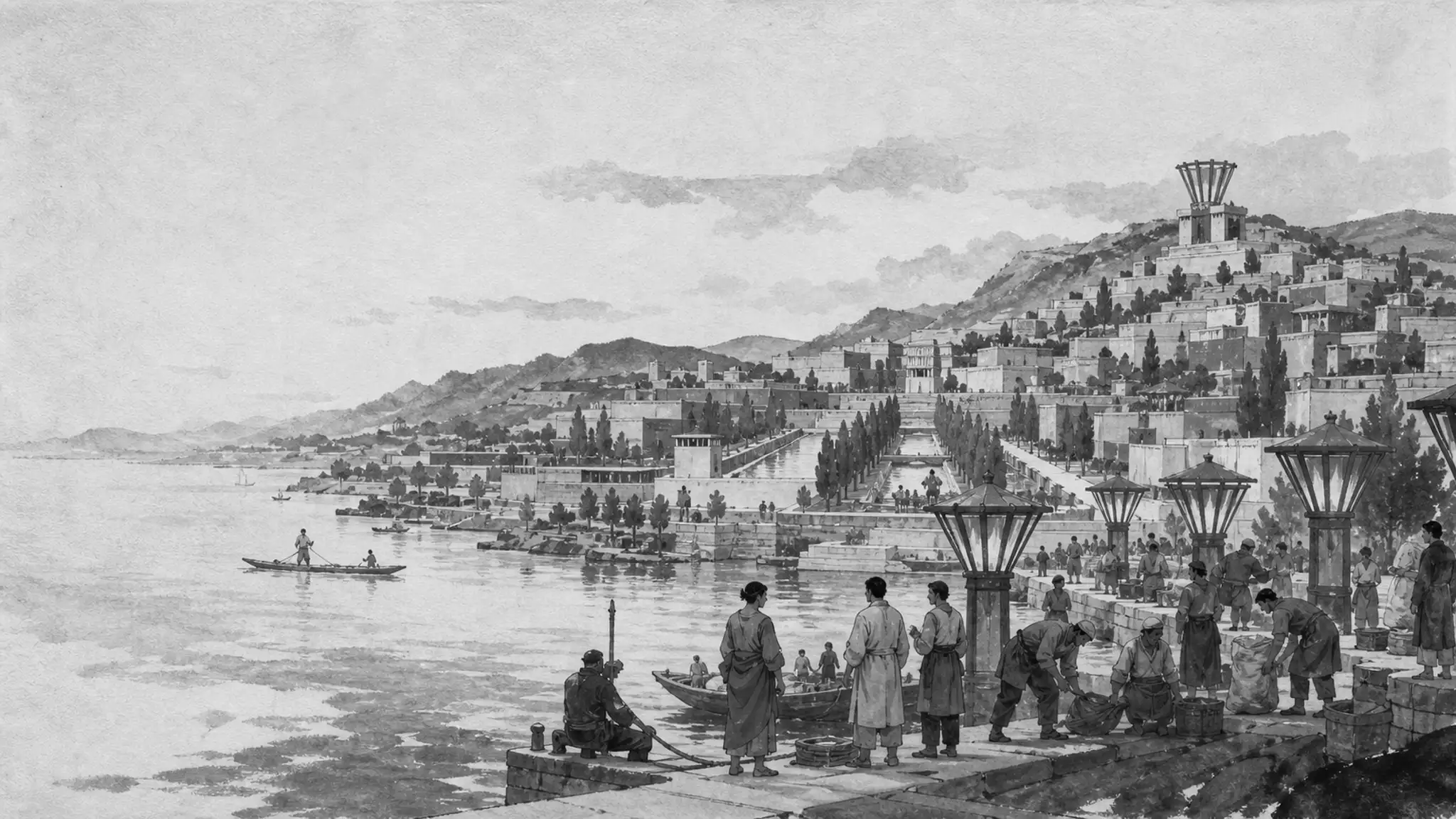
Valoria
One national expression of Politeia.
Valoria is Politeia's principal model nation. The doctrine is in force here, across government, planning, culture, and everyday life.
How to use the model
Valoria is an example, not the doctrine.
Other societies could adopt Politeia without copying Valoria's institutions, culture, or constitution. The model makes one version concrete enough to examine and criticize.
Start here
Read Politeia first, then the Valoria overview. The difference between the doctrine and the country matters.
The boundary
The constitutional pages describe a first draft. The main institutions are clear enough to examine, while formal titles, detailed procedures, and article-by-article drafting remain open.
Valoria
The state before the systems.
- Valoria OverviewOne doctrine made concrete enough to examine, criticize, and compare.
- ConstitutionStates the mission, the rights, and the restraints, each with a review path.
- Government DesignBalances competence, accountability, and rotation so that no office belongs to anyone.
- Constitutional OrderDraws the institutional skeleton and the limits that bind each organ of it.
- Party and StateThe Party’s leading role is permanent; its hold on state offices is not.
- Representative BodiesTwo separate congresses, National and Party, each with published duties and public records.
- Central LeadershipSelects, constrains, and confirms the principal leadership, for terms that end.
- Executive and Expert CouncilsSplits execution from expertise so that neither office answers only to itself.
- Courts and ProcuracySeparates judging from prosecuting and fences both against political instruction.
- Regional and Local GovernmentNational standards, regional discretion, local mandates, and one defined route for intervention.
- Rights and Public FreedomsRights anyone can enforce, up to the line where criticism becomes targeted harm.
- Amendment, Removal, and EmergencyEmergency powers run on 60, 90, and 30-day clocks; amendment and removal run on published votes.
- Atlas: Basins and CorridorsFour basins, four trunk corridors, and the confluence where they meet.
Governance and law
Where power meets the law.
- GovernanceHolds public power to law: due process, named responsibility, and a franchise that resists capture.
- Rule of LawPredictable process, constrained force, and an appeal path that runs.
- Civil and Criminal ProcessEvidentiary discipline and procedure you can invoke when an outcome is wrong.
- AccountabilityEvery failure lands on a named office, an independent review, and a published correction.
- Democracy and FranchiseParticipation rules built to survive capture, and a franchise checked over long horizons.
- Public KnowledgeDisclosure written for oversight, legible where it changes decisions.
Systems
The conditions the country has to manage.
- EconomyPlans in the open: targets set in tiers, variances published, misses corrected on the record.
- EcologyTurns ecological limits into planning constraints with memory: carbon budgets, basins, zoning.
- InfrastructureRuns energy, transport, water, and communications as one corridor system, built for repair.