
Continuity
Civil Defense
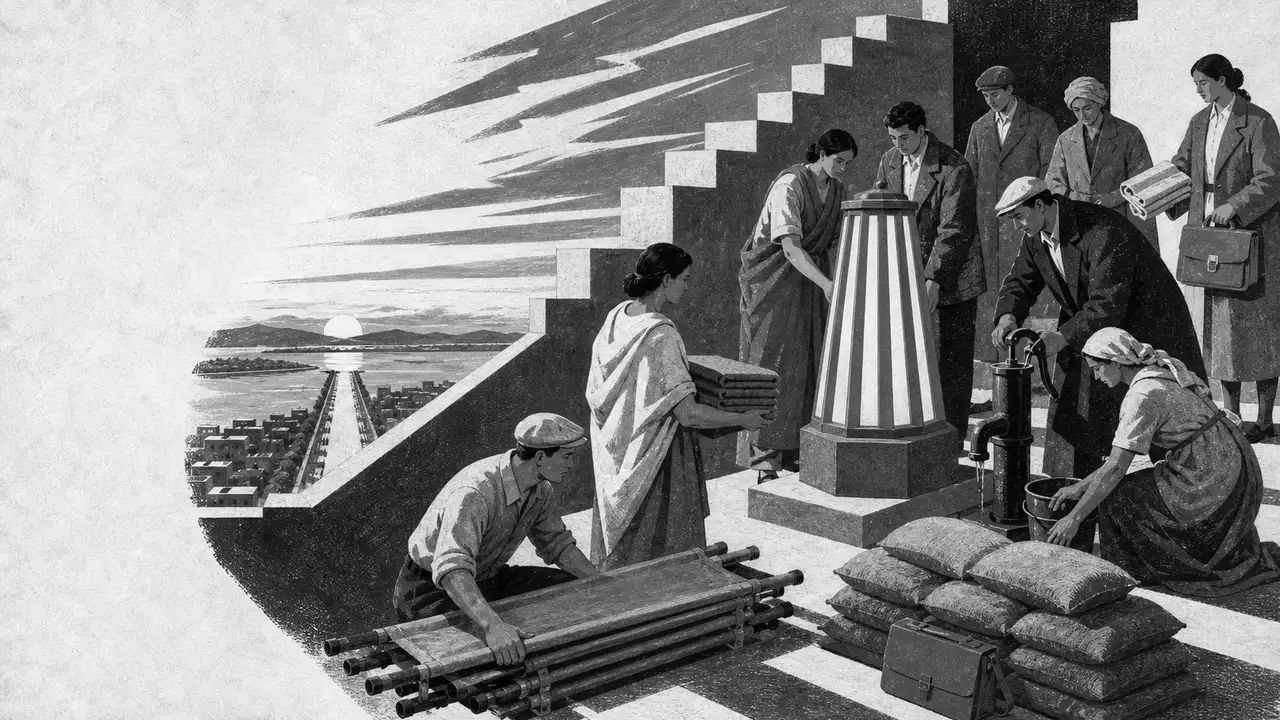
Civil defense means emergency readiness, infrastructure repair, evacuation, mutual aid, and keeping essential services running under stress.
The limit
What protection may do, and what it may not become.
The model prepares for failure without treating force, secrecy, or permanent emergency as normal public life.
Plain English
Civil defense means a society can protect people when storms, outages, fires, attacks, or system failures happen.
Common Concern
Civil defense sounds militarized when it is built on fear. Valoria builds it on preparation: supplies, drills, and repair capacity that serve ordinary safety.
Public Readiness
Readiness includes training, supplies, evacuation planning, communications, medical capacity, and infrastructure repair.
Readiness should make a crisis less chaotic before harm spreads.
Local Capacity
Local institutions need enough capacity to respond before national systems arrive.
Civil defense works best when ordinary people understand the basics and institutions communicate clearly.
What preparedness keeps ready
- Evacuation routes drilled before they are needed
- Repair capacity held in reserve, not procured mid-crisis
- Mutual aid organized block by block
- Essential services mapped for continuity under stress
- Drills that stay calm, public, and unarmed
Continuity Without Panic
The model rejects fear-driven politics.
Preparedness is treated as public maintenance: boring when done well, visible when needed.
Go deeper
Longer reading and the adjacent systems this one leans on.